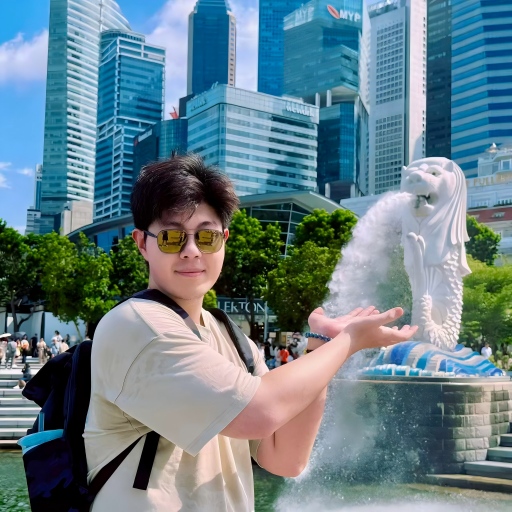

Hi there! I am Yuan Wu (吴渊), a Ph.D. student at PCALab, School of Computer Science and Engineering, Nanjing University of Science and Technology (NJUST). I am fortunate to be supervised by Prof. Jian Yang and co-supervised by Dr. Zhiqiang Yan.
If you’re interested in my research, feel free to reach out with any questions or suggestions! 😊
🔍 Research Interests
2D Depth Perception
Estimating depth from visual observations to recover scene geometry.
3D Occupancy Perception
Determining each 3D voxel’s occupancy status and semantic class.
World Model
Learning representations of scene dynamics to predict how the world may evolve.
📝 Publications
Seeing 3D Occupancy Through Scene-Adaptive Projection
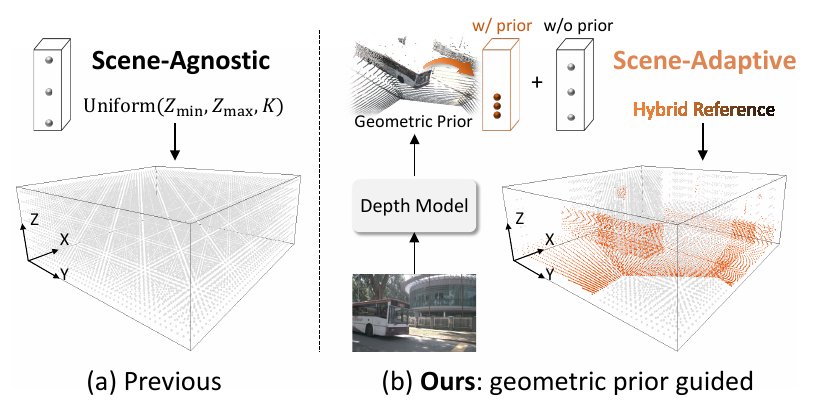
SAP introduces scene-adaptive projection for vision-based 3D occupancy prediction. It predicts metric depth maps and back-projects them into 3D to obtain geometric priors. These priors guide reference sampling to supported height regions, with full-range sampling retained elsewhere.
ShoWorld: Shape-Faithful Multi-Hypothesis Occupancy World Model
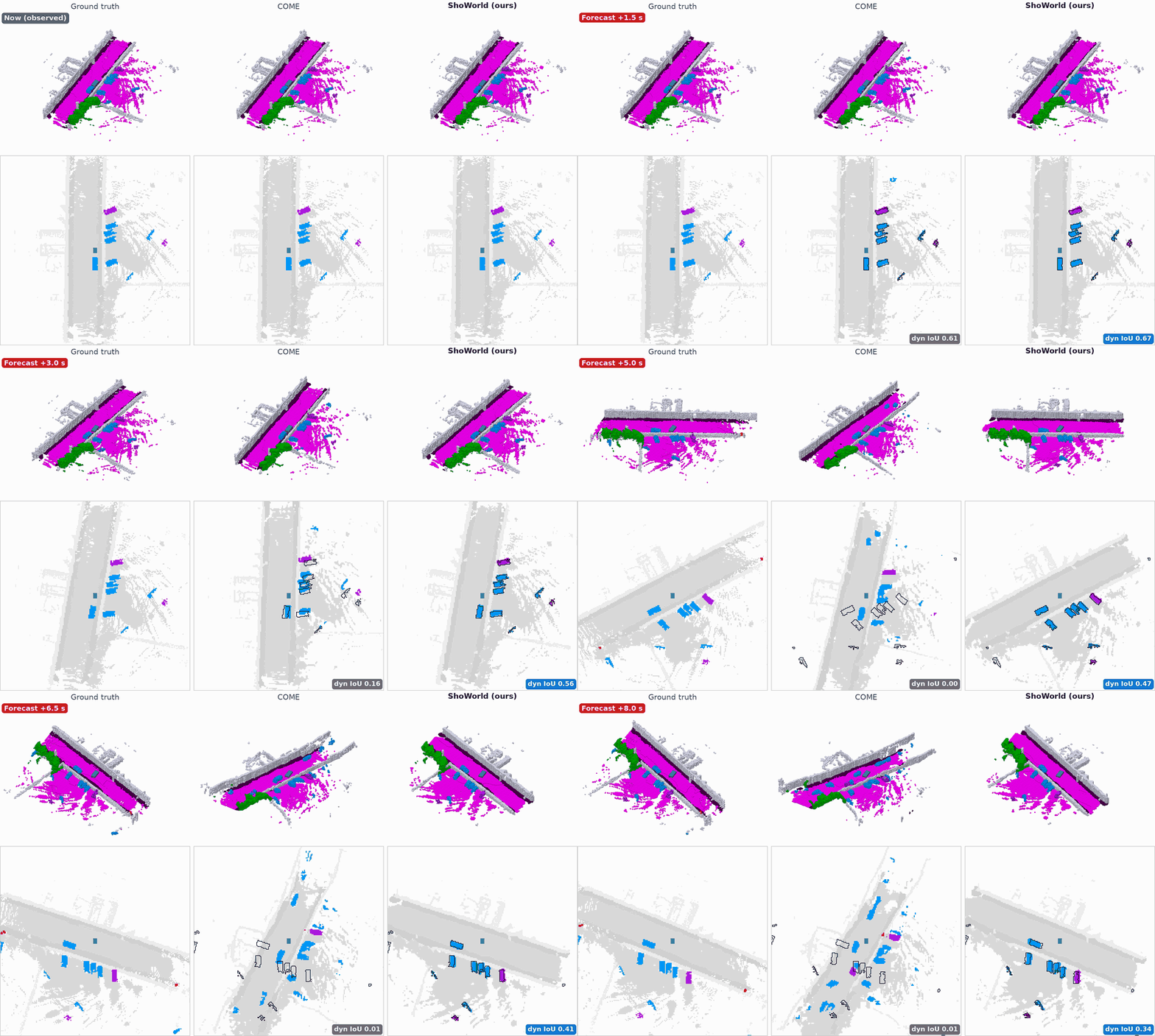
ShoWorld forecasts where moving objects go and what they look like. A multi-hypothesis motion forecaster predicts probabilistic trajectories whose renderings are fused by their probabilities, and sub-voxel points with any-hit rendering keep object shapes faithful under arbitrary motion.
Height-Guided Projection Reparameterization for Camera-LiDAR Occupancy
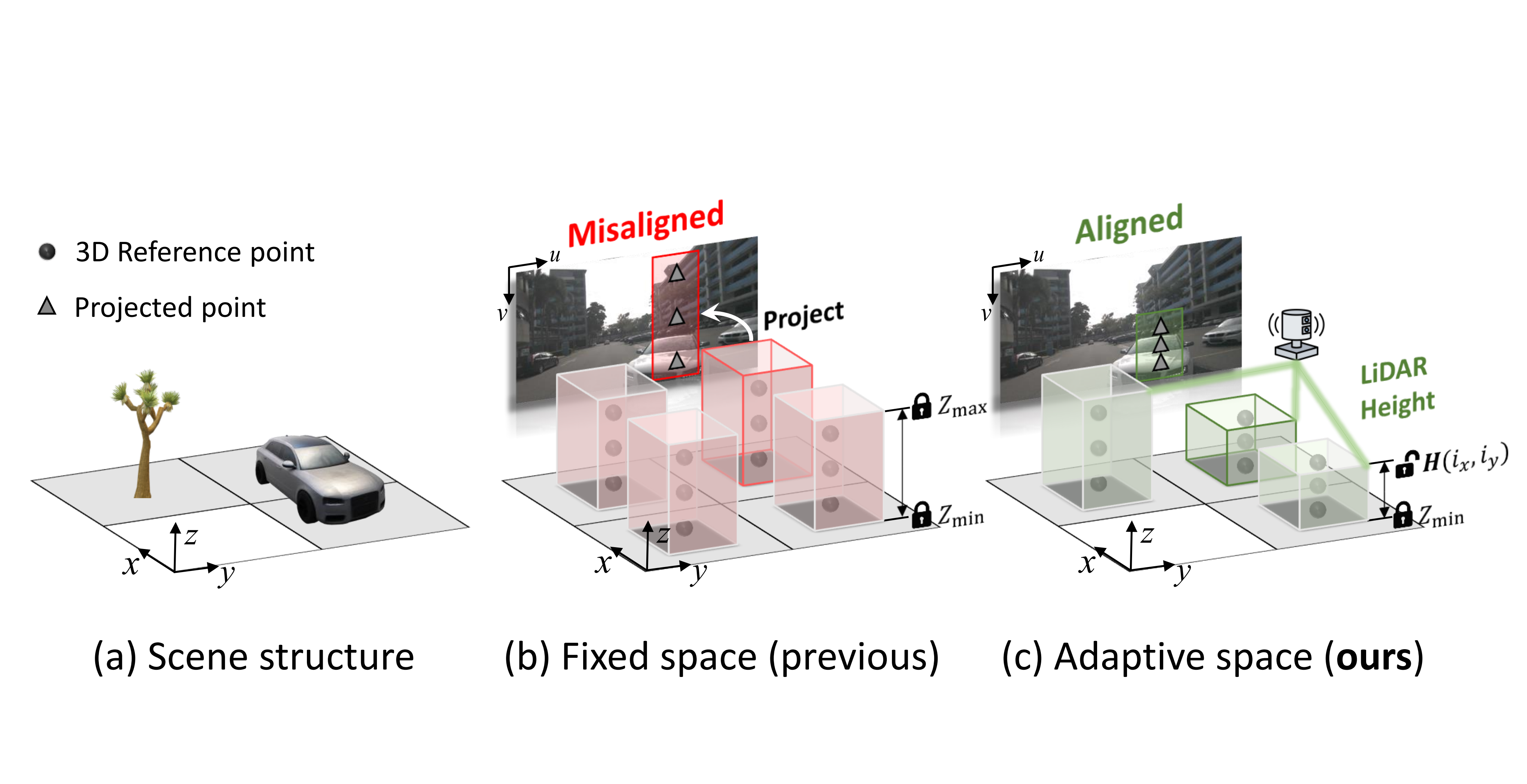
Most previous methods rely on a fixed projection space, where 3D reference points are uniformly sampled along pillars. However, such sampling struggles to capture the sparsity and height variations of real-world scenes, leading to ambiguous correspondences and unreliable feature aggregation. To address these challenges, we propose HiPR, a camera-LiDAR occupancy framework with Height-Guided Projection Reparameterization.
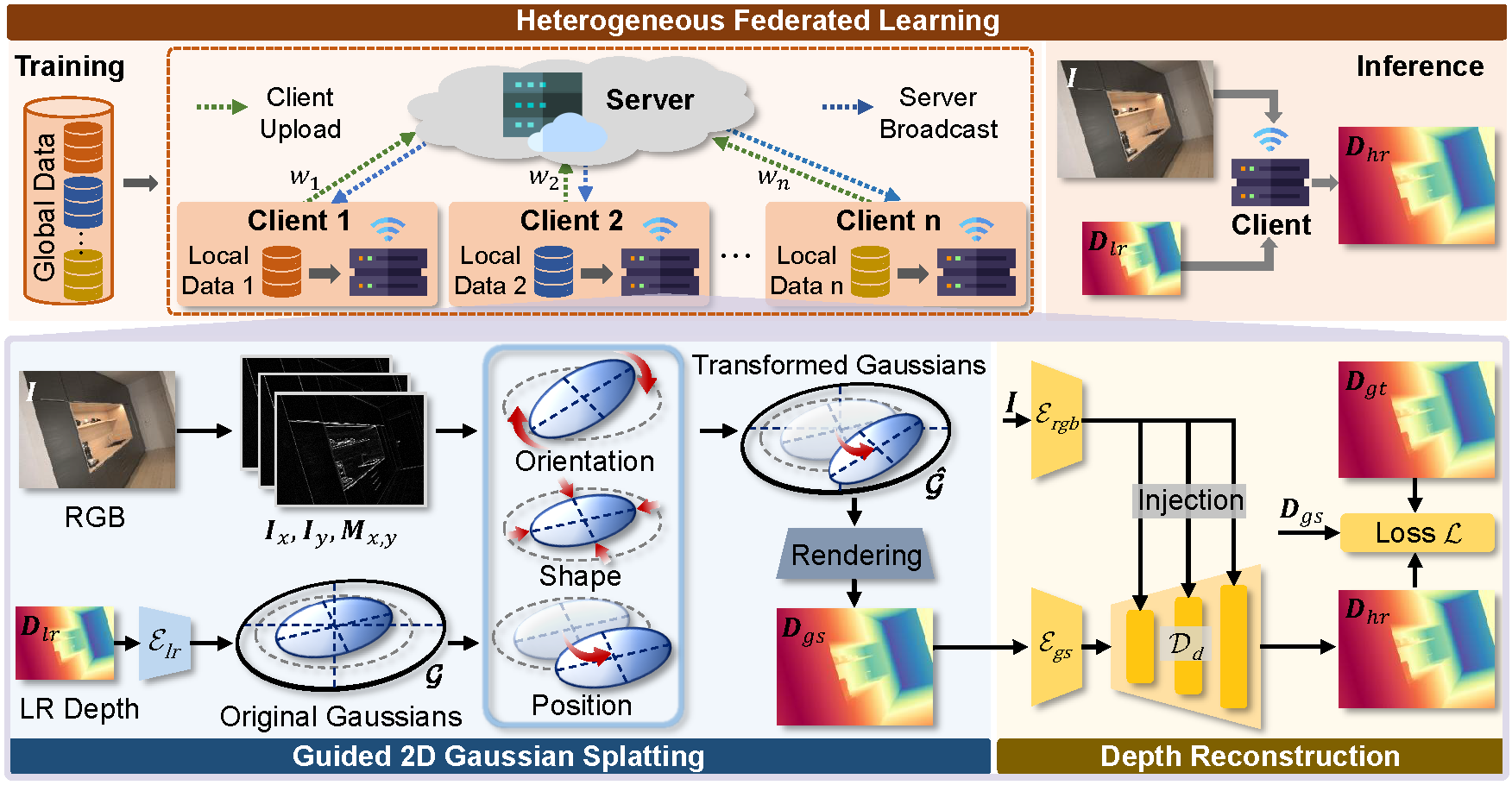
FoundDSR: A Generalizable Foundation Model with Guided 2D Gaussian Splatting for Depth Super-Resolution
FoundDSR uses high-resolution RGB images to guide 2D Gaussian Splatting for depth super-resolution. It trains on heterogeneous datasets through federated learning and generalizes zero-shot to unseen scenes, upsampling scales, and noise conditions.
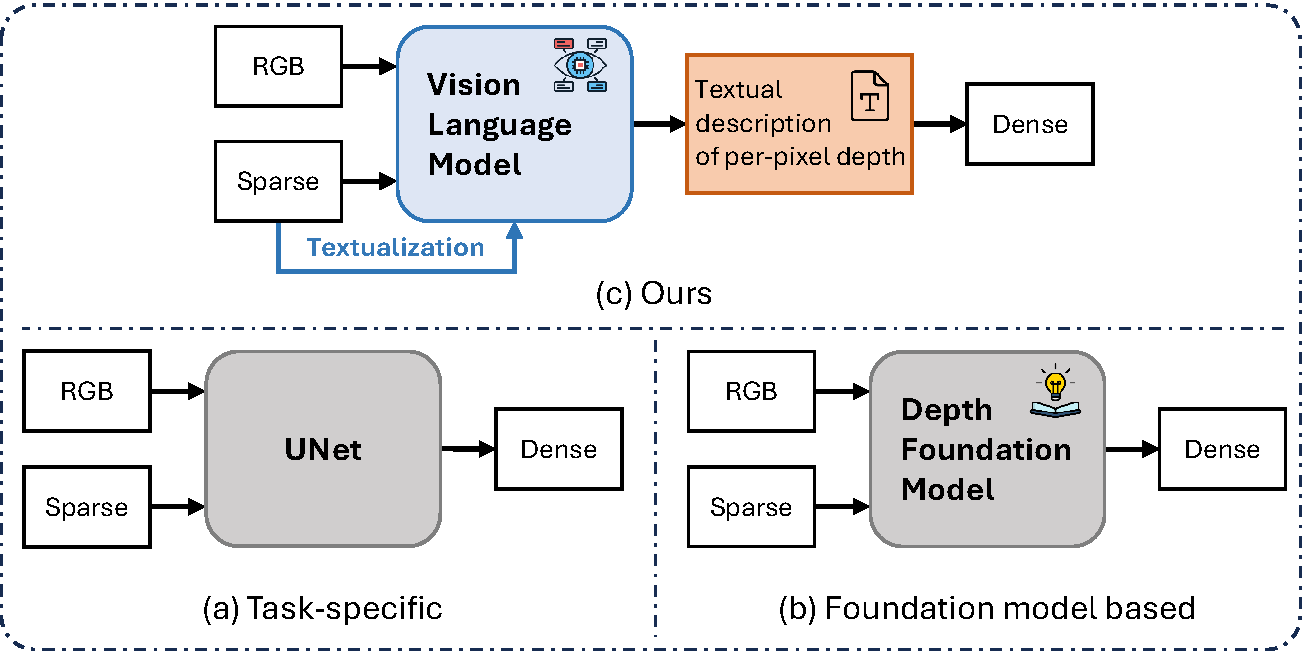
Zero-Shot Depth Completion with Vision Language Model
This paper introduces the first VLM-based depth completion framework. We propose a sparse depth injection mechanism that extends VLM's capability toward 3D perception through three key aspects: visual tokenization, textual prompt, and textual supervision.

SpatioTemporal Difference Network for Video Depth Super-Resolution Oral
We propose STDNet, a novel framework for video depth super-resolution. STDNet introduces spatial and temporal difference mechanisms to mitigate long-tailed effects in video depth super-resolution. This design enables precise depth calibration and motion compensation, leading to state-of-the-art performance.
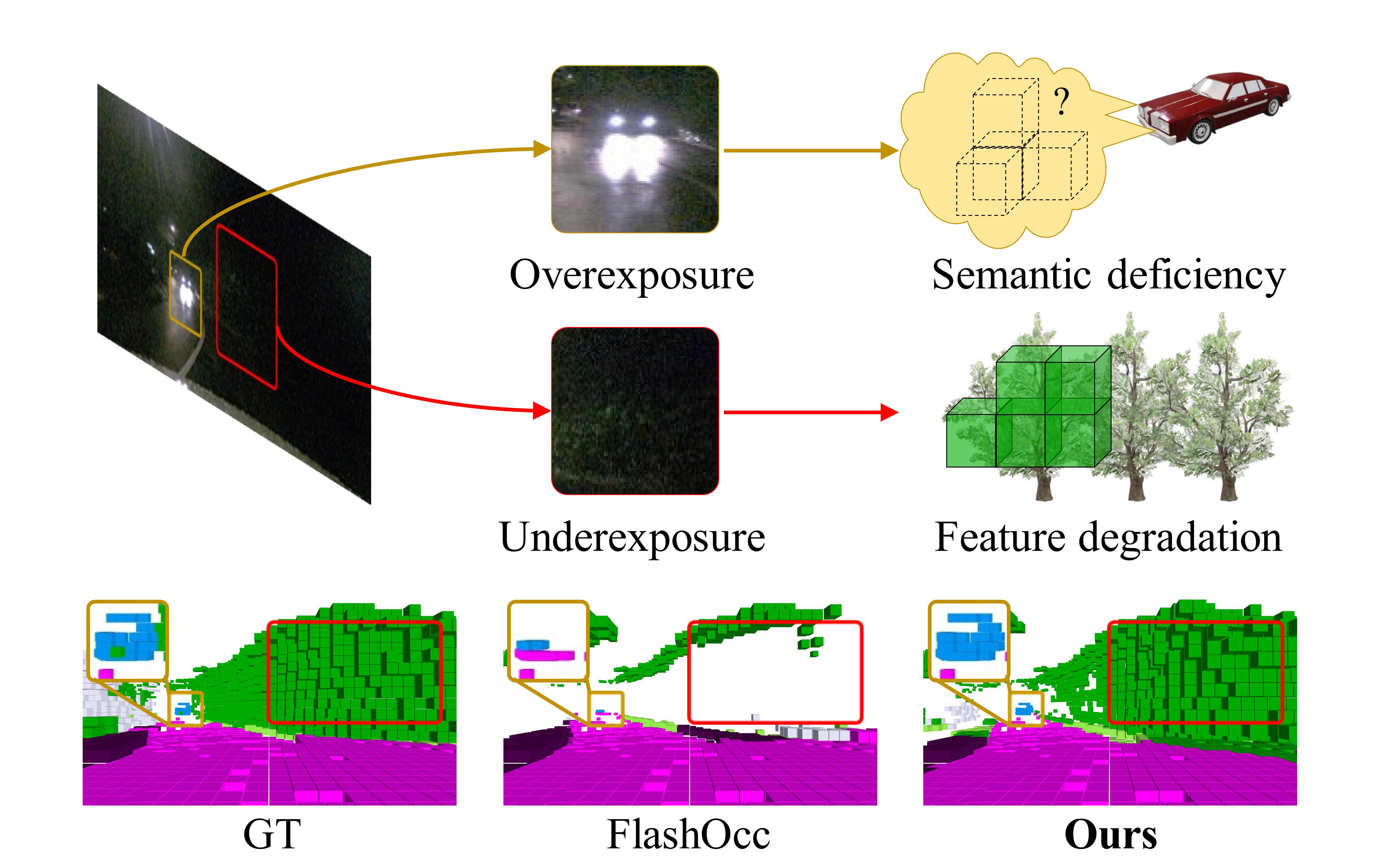
See through the Dark: Learning Illumination-affined Representations for Nighttime Occupancy Prediction
Existing vision-based methods perform well on daytime benchmarks but struggle in nighttime scenarios due to limited visibility and challenging lighting conditions. We introduce LIAR, a novel framework that learns illumination-affined representations for nighttime occupancy prediction.
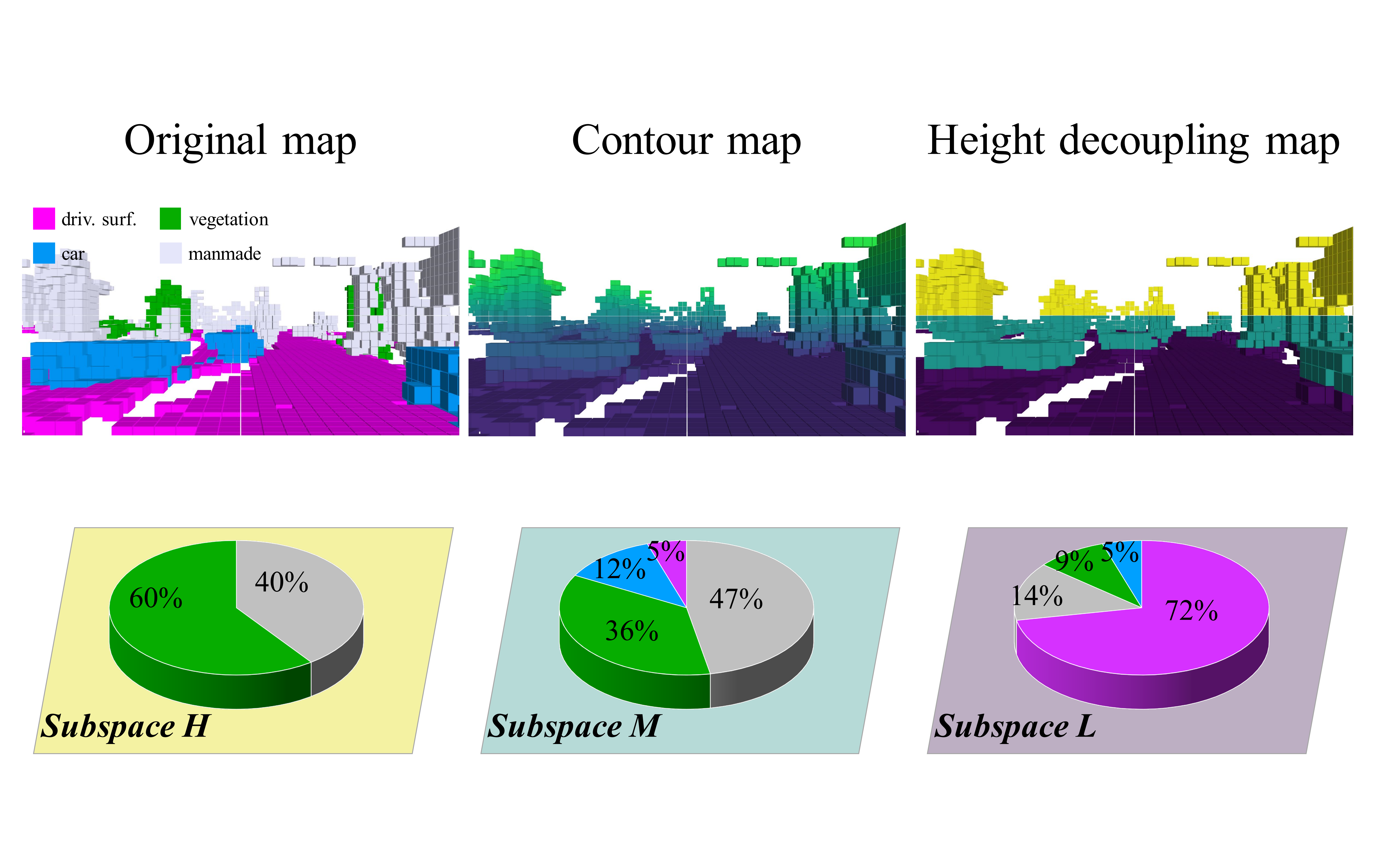
Deep Height Decoupling for Precise Vision-based 3D Occupancy Prediction
For the first time, we introduce the explicit height prior into the vision-based 3D occupancy prediction task. Owing to the novel deep height decoupling and sampling strategy, our model achieves state-of-the-art performance even with minimal input cost.
🎖 Honors and Awards
- 2024.06: Outstanding Graduates of NJUST
📖 Education
- 2024.09 - present: Ph.D. student, School of Computer Science and Engineering, NJUST
- 2020.09 - 2024.06: B.Eng., School of Intelligent Manufacturing, NJUST